
What makes modern minimalist furniture
From the mid-1990s onward, ideas about furniture changed a great deal. Homeowners started looking for variety, and a series of fully worked-out design philosophies, modernism and postmodernism among them, made their way into interior design. Before that, the dominant look leaned on cherry wood as the main veneer, with elaborate lines and heavy carving. Baroque furniture is covered in intricate carved ornament. Rococo furniture also values carving but with softer, more flowing lines. Neoclassical furniture is crisper and cleaner, and relies on inlay rather than carving for its richness.
The biggest break came from the Danish functionalists of the mid-20th century, the founders of Nordic modernism. Working across architecture, furniture, lighting, textiles and applied art, they gave furniture a strong sculptural presence and an organic form language, and married modern design thinking to Danish craft tradition. Their approach to living-room furniture had its own clear logic: honest use of materials, a complete and visible structure, and clever functional design that could still be mass-produced. It is why those pieces remain so appealing today.
Alongside all this modernism, a taste for the classical has also come back: traditional Chinese interiors built around ink painting, calligraphy and Ming- and Qing-style furniture, for example. The catch is cost; well-made reproduction pieces are expensive, which puts them out of reach for many people who admire the look. One traditional rule is worth keeping regardless of style: do not leave the sofa with empty space, a window or a door behind it, since that makes the seating feel exposed. Give it a wall or a screen to sit against.
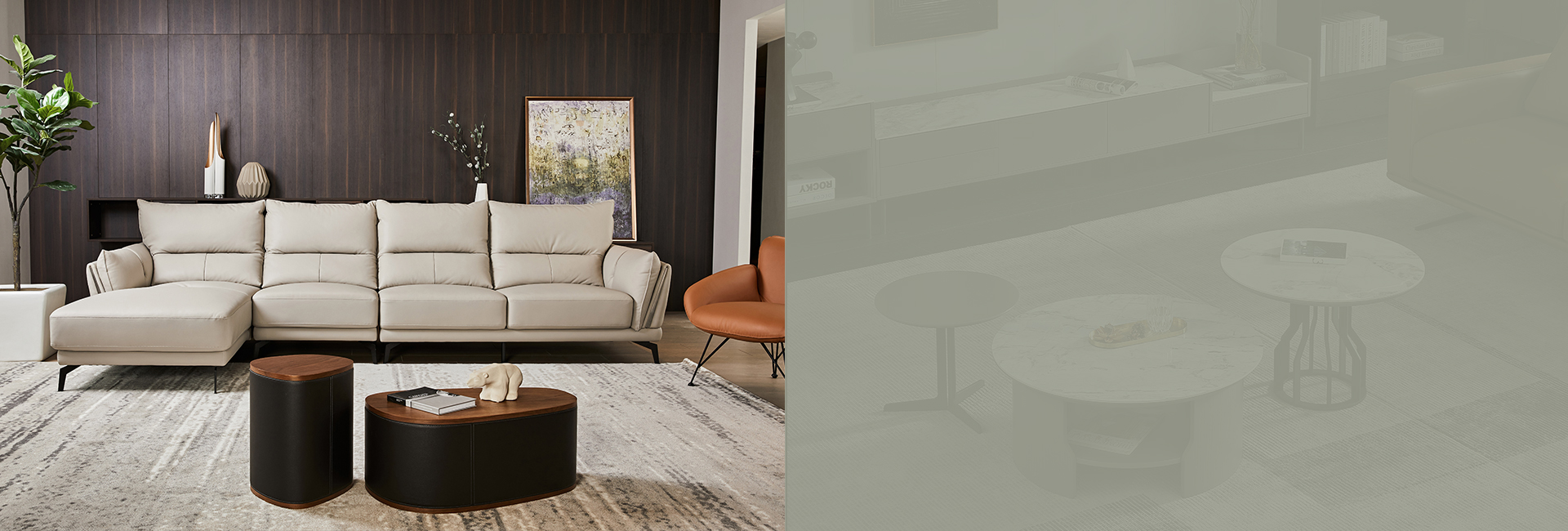
Modern minimalism is "simple but not simplistic", and it is the style most living-room furniture follows today. It prizes open, flowing space, avoids cluttering the room with too many pieces, and keeps simplicity as the base note. Where it breaks its own rule is color: a few contrasting colors set against each other give the room a youthful energy without adding ornament.
The floor plan shapes the whole look, so once you have settled on a style, think about the visual elements around the room, from mirrors to flooring, before choosing living-room furniture. Keep the layout of the living room clear and legible. Bold colors can work, but do not choose materials that are all hard to the touch, and pair the furniture with a floor that suits it. The details are what make the room feel finished.