
Why you might avoid white furniture
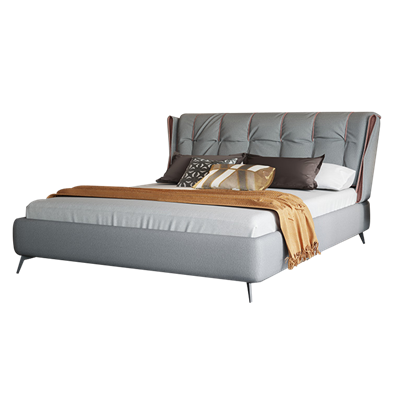
White is a remarkable color. It makes a room feel bigger and brighter, and it has always been popular; white furniture reads as romantic and clean, and a large share of couples furnishing their first home choose it. What you may not know is that white furniture hides more pitfalls than any other color. A retired craftsman who spent twenty years in furniture factories shared the following. Here is what to watch for.
1. White furniture yellows
People love the look of white, but poorly chosen white furniture will yellow, without exception. Think of a white shirt after a year: the color turns, it looks wrong, and eventually it gets thrown out. Furniture is the same, except that you cannot bring yourself to throw out a piece you bought only a few years ago. Is there white furniture that does not yellow? Yes. The key is the surface material. Almost every paint or lacquer finish on furniture will yellow over time: open-pore, closed-pore, semi-closed, PU, PV, even finishes sold as yellowing-resistant.
Only one kind of paint holds its color: high-gloss lacquer, the mirror-like finish. The other option is no paint at all. There are newer surface materials that are heat-pressed onto the piece in a single high-temperature step. No paint means no yellowing.
2. White furniture is hard to keep clean
Anyone who has worn a white shirt to dinner knows this. One careless moment and there is a mark you cannot get out no matter what you try. White furniture is the same: some marks simply will not wipe off. You may be told to rub them with toothpaste. That can lift a small spot, but a larger area never comes back to the original white, and after three to five years of this the piece is hard to look at.
Here is a test that works every time. In the showroom, ask the salesperson to draw on the surface with a ballpoint pen; it has to be ballpoint. If it wipes off clean, buy it. If it does not, save yourself the trouble.
3. White furniture is the hardest to make low-emission
Of all furniture, white is the hardest to bring within emission limits. The paint on white furniture has to go on thicker, so there is more of it, and more paint is never better for indoor air. White furniture is also usually made from engineered board rather than solid wood, and board is generally less clean. Worst of all, under a white finish you cannot see what is underneath. This is why some white furniture arrives with a smell so sharp it cannot be used. How to check: open the drawers and the wardrobe doors. A faint paint smell is normal, but if it stings your nose or eyes, walk away. That is formaldehyde and other volatile compounds well above the limit.
4. White furniture is often made from poor board
Most white furniture is a wood-and-board combination: the main frame is solid wood, everything else is board. Board is held together with adhesive, which makes it brittle, so it breaks easily under load, from a knock, or during a move. How do you judge the board? Some showrooms keep a drawer filled with water, sometimes with fish living in it, and you can tell it has been there a long time from the algae on the edges. Board that can sit in water that long without swelling or bubbling is good board and worth choosing.
5. White furniture lives or dies by its hardware
Hardware is the skeleton of white furniture. When a person's skeleton fails, ordinary life becomes difficult; when furniture hardware fails, the piece is usually finished. The most common complaint with modern white furniture, often around the three-year mark, is a drawer that has pulled apart, a door that no longer closes, or fittings that have rusted.
How to check: look at the drawer slides first, since nearly every drawer failure is a slide failure. They should look solid and thick. Then examine the door hinges on the showroom pieces for any rust. Finally, look for a brand mark on the hardware itself. The larger hardware makers stamp their logo on their fittings.